Why does my AC need service ??
Why Proper AC Servicing Matters More Than You Think
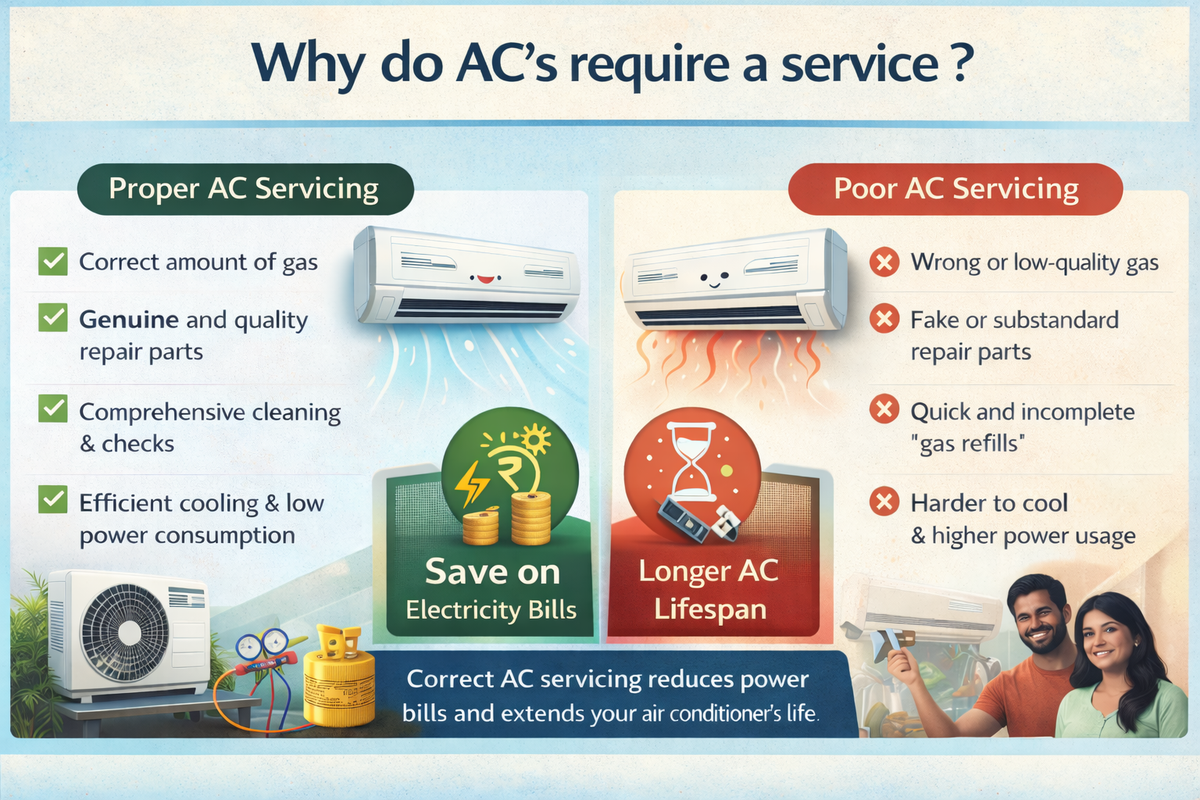
Air conditioners are one of the highest electricity-consuming appliances in any home, especially in hot and humid climates. Yet, many people treat AC servicing as a routine formality rather than a technical process that directly affects performance, power consumption, and durability.
Servicing an AC with the correct procedure, accurate gas charging, and genuine repair parts is not optional—it is critical. Incorrect servicing may make the AC appear to work temporarily, but it silently increases electricity bills, damages internal components, and shortens the unit’s lifespan.
Correct AC Servicing Procedure: What It Actually Involves
A proper AC service is far more than just cleaning filters.
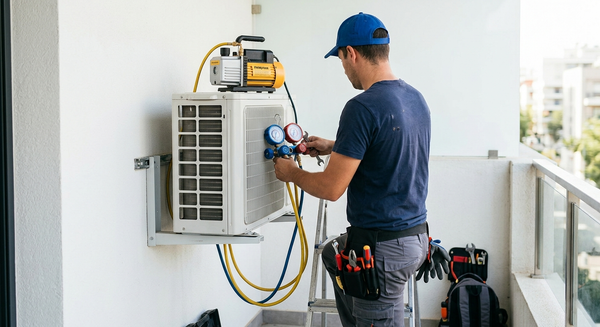
Key Steps in a Correct AC Service
- Deep cleaning of indoor and outdoor coils
- Checking electrical connections and capacitor health
- Measuring operating pressure and temperature
- Vacuuming the system before gas charging
- Gas top-up only if required, not blindly
- Using manufacturer-recommended parts
Skipping any of these steps results in inefficient cooling and higher power draw.
Why Correct Use of AC Gas Is Crucial
One of the most common servicing mistakes is unnecessary or incorrect gas filling.
Problems Caused by Incorrect Gas Charging
- Low gas → Poor cooling, longer run time, higher electricity bills
- Overcharging gas → Compressor overload and permanent damage
- Wrong gas type → Reduced efficiency and safety risks
Correct gas pressure ensures the compressor works efficiently, consuming less power while delivering faster cooling.
Impact of Proper Servicing on Electricity Savings
When an AC is serviced correctly:
- Cooling improves by up to 20–30%
- Compressor cycles reduce
- AC reaches the set temperature faster
- Electricity consumption drops noticeably
A poorly serviced AC works harder for longer hours, directly reflecting in higher monthly power bills. Over a year, improper servicing can cost more than the service itself.
How Proper Servicing Extends the Lifespan of an AC
An air conditioner is designed to last 10–15 years, but only when maintained properly.
Benefits to AC Lifespan
- Reduced compressor stress
- Lower wear on electrical components
- Fewer breakdowns and gas leaks
- Delayed need for expensive replacements
Using genuine parts ensures compatibility and reliability, while cheap or fake parts often fail early and damage surrounding components.
Risks of Cheap or Incorrect AC Servicing
Many low-cost services focus on speed, not correctness.
Common risks include:
- Gas filling without pressure testing
- Using low-quality or mixed refrigerants
- Replacing parts unnecessarily
- Ignoring electrical safety checks
Such practices may reduce cooling costs short-term but lead to expensive repairs later.
How Homeowners Can Ensure Correct AC Servicing
- Ask whether pressure and temperature readings are taken
- Confirm vacuuming before gas charging
- Ensure only manufacturer-approved gas and parts are used
- Request a service report or checklist
- Avoid technicians who suggest gas refill every service
An informed customer is the best protection against improper servicing.
FAQs
Does AC need gas refill every year?
No. Gas does not reduce unless there is a leak.
Can improper servicing increase electricity bills?
Yes. Poor servicing can increase power consumption by 20–40%.
Are genuine parts really important?
Yes. Fake parts reduce efficiency and damage the system.
How often should AC be serviced properly?
At least once a year, ideally before peak summer.
Does proper servicing improve cooling speed?
Absolutely. Clean coils and correct gas improve heat exchange.
Conclusion
Servicing an AC with the correct procedure, correct gas usage, and genuine repair parts is not just about cooling—it directly impacts electricity savings, performance, and lifespan. Proper servicing keeps power bills under control, prevents major breakdowns, and ensures your AC runs efficiently for years.
Cutting corners during servicing may save a little today, but it costs far more in the long run.